

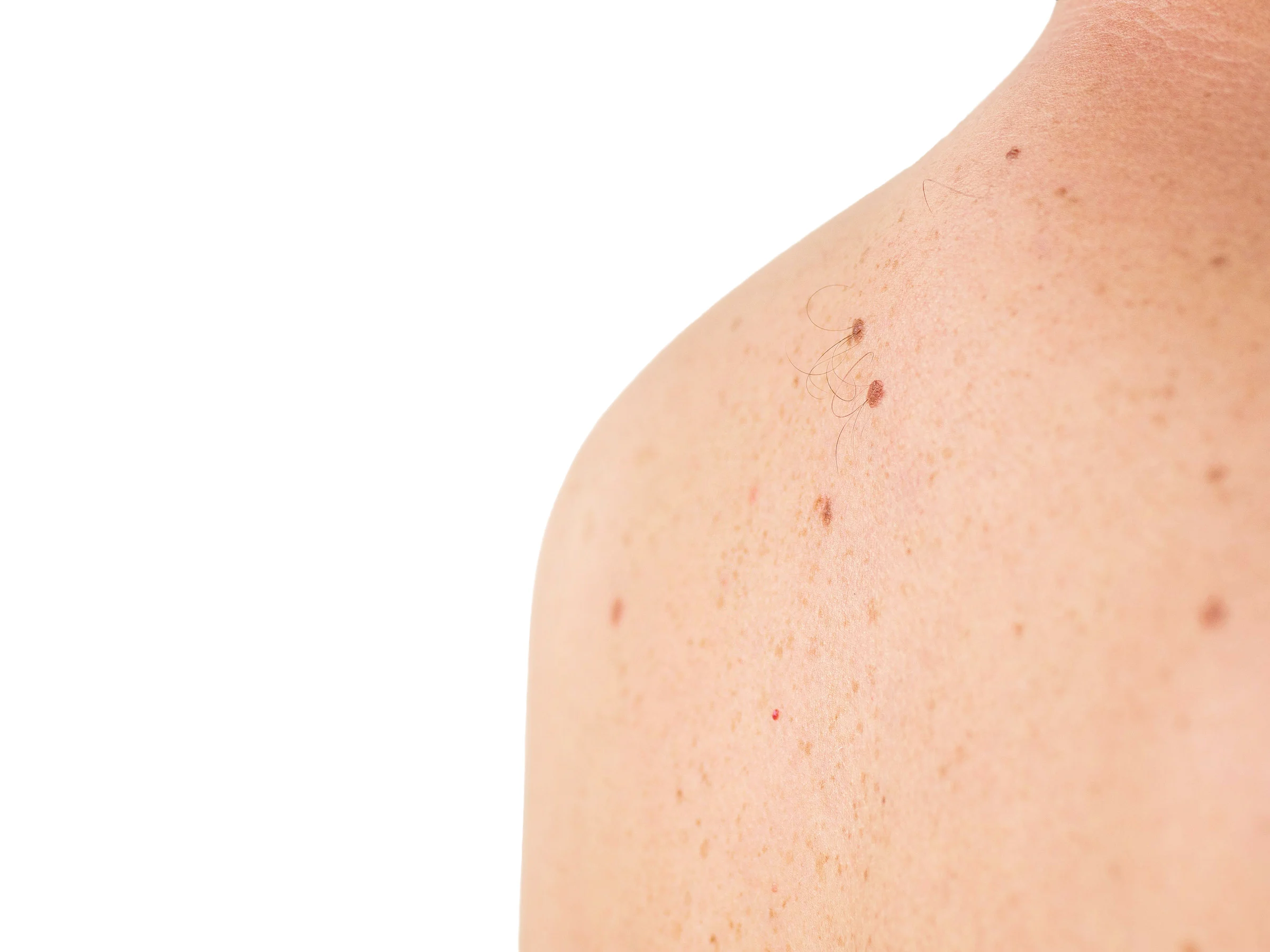
A total body exam is a visual check of the skin from scalp to soles for new or changing moles, precancerous growths and signs of skin cancer. Paz Dermatology performs total body exams at its Fresno and Visalia, California offices and recommends one every year, more often after a skin cancer.
The easiest way to catch skin cancer early
Skin cancer is the most common cancer in the United States, and about one in five Americans will have it at some point.[1] The encouraging part is that it grows where it can be seen. Found early, it’s usually simple to treat.
A total body exam is a careful look at all of your skin by someone trained to tell the ordinary from the unusual. There’s no blood work and nothing to prepare.[2] Your provider checks each spot, notes anything worth watching, and answers the question you came in with.
What we look for
- New moles, and moles that have changed
- Spots that look different from the rest, or that itch or bleed
- Rough, scaly patches that can come before skin cancer
- Early warning signs of melanoma and other skin cancers
- Sun damage that shapes how often you should be checked
- 1 in 5Americans who will develop skin cancer in their lifetime, which makes it the most common cancer in the country.[1]
What happens at your exam
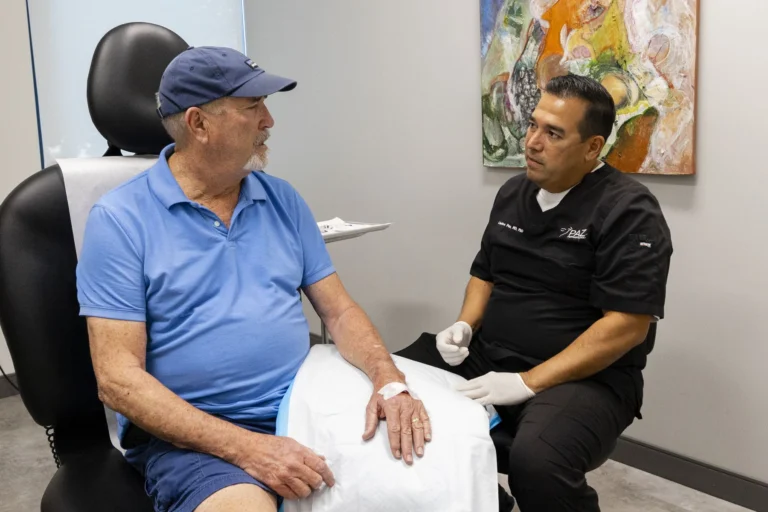
- A quick conversation We ask about sunburns, tanning, family history and any spot that’s been on your mind. If there’s one you’re worried about, tell us first.
- Scalp to soles You change into a gown, and your provider works through your skin section by section, including the scalp, behind the ears, between the toes, the soles of your feet and your nails.[3] Spots of interest get a closer look through a lighted magnifier.
- The answer, in plain words Most of the time, everything looks as it should, and you’ll hear that directly. Anything worth watching gets noted or photographed so it can be compared next time.
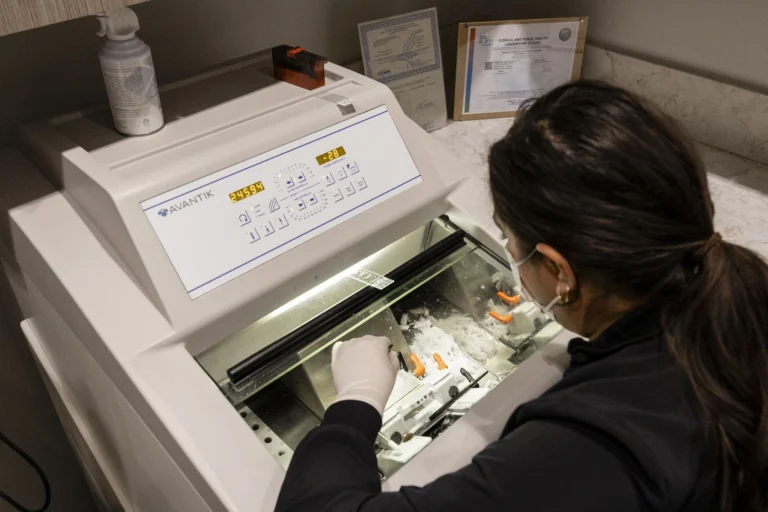
- A next step, if one’s needed A spot that needs a firmer answer gets a biopsy, where a small sample goes to the lab. If it’s precancerous or a skin cancer, you’ll leave knowing the plan.
- About 10 minutesHow long a skin check itself takes.[2] It’s one of the quickest appointments you’ll ever have that can matter this much.

Every finding has a next step
The point of a skin check is a clear answer for each spot. Here’s how it usually goes.
| What we see | What happens next |
|---|---|
| A normal, stable mole | Nothing. It’s noted, and you get your next check date. |
| A spot to keep an eye on | It’s photographed and compared at your next visit, and mole mapping can track many spots at once. |
| A precancerous patch | It’s treated, usually in the office or with a prescription, before it can become a skin cancer. |
| A suspicious spot | A biopsy settles it, and the lab result tells us what it is. |
| A skin cancer | It’s removed here, and for some cancers on the face or other delicate areas, with Mohs surgery. |
Having all of those steps in one practice means nothing gets lost between offices, and the provider who saw the spot can follow it through.
Places people forget to check
| Area | Why we look |
|---|---|
| Scalp | Hair hides spots completely, so a part-by-part look matters.[3] |
| Back and shoulders | Hard to see yourself, and a common place for spots to change unnoticed.[3] |
| Between the toes and on the soles | Easy to miss, and skin cancer can start where the sun rarely reaches.[3] |
| Fingernails and toenails | A dark streak or spot under a nail is worth a look.[3] |
| Behind the ears and back of the neck | Two of the most overlooked sun-exposed spots.[3] |
The Paz difference
A skin check that doesn’t end at “come back later”
Checking skin is the everyday work of this practice, and so is everything that follows it. A spot that needs watching can be photographed and tracked here, a biopsy can be done here, and if something needs removing, that happens here too, including Mohs surgery with our own lab.
With offices in Fresno and Visalia, your yearly check is close to home, and the notes and photos from last year are right there to compare against.
- Every yearHow often we recommend a total body exam, and more often if you’ve had skin cancer.
Who should book a total body exam
It’s especially worth it if you have:
Good to know:
- There’s no blood work and nothing to prepare[2]
- You choose how much the exam covers, and you can ask to skip any area
- Bring a list of spots you’ve been watching, or photos of them
If you’re not sure whether you need one, that’s a good reason to book one. Early checks are how small problems stay small.
Between visits
A yearly exam works best alongside a quick look of your own. Once a month is a good rhythm.[3]
How to check yourself
- Use a full-length mirror for the front and back, then raise your arms and check each side[3]
- Look at your forearms, underarms, palms and fingernails[3]
- Check the backs of your legs, your feet, between your toes and your soles[3]
- Use a hand mirror for your scalp, the back of your neck and your back[3]
If you notice a spot that’s different from the others, or one that changes, itches or bleeds, don’t wait for your yearly visit. Call us.[3]
Concerns treated
These are some of the concerns a total body exam looks for. Pick one to learn more about it.
What treatment costs
A total body exam is medical care, and it’s handled differently from the cosmetic treatments on this site. Our office walks you through what applies to you when you book, so nothing about it comes as a surprise.
Skin check questions, answered
We recommend once a year for most adults, and more often if you’ve had skin cancer before. If you have many moles or a strong family history, your provider may suggest a different schedule.
You’ll change into a gown so we can see all of your skin, and you can ask us to skip any area you’d rather not have checked. It’s your exam.
No. It’s a visual exam. A biopsy, if you need one, starts with a numbing injection, and that’s the only needle involved.
Then you’ll know what it is and what comes next. Many spots only need watching. A suspicious one gets a biopsy, and if it’s a skin cancer, treatment happens here.
Self-checks are worth doing, and they work best alongside a professional look. Your back, scalp and the soles of your feet are hard to see yourself.[3]
Yes. Skin cancer develops in every skin color, and in darker skin it often shows up in places that get little sun, like the palms, soles or under a nail.[4]