

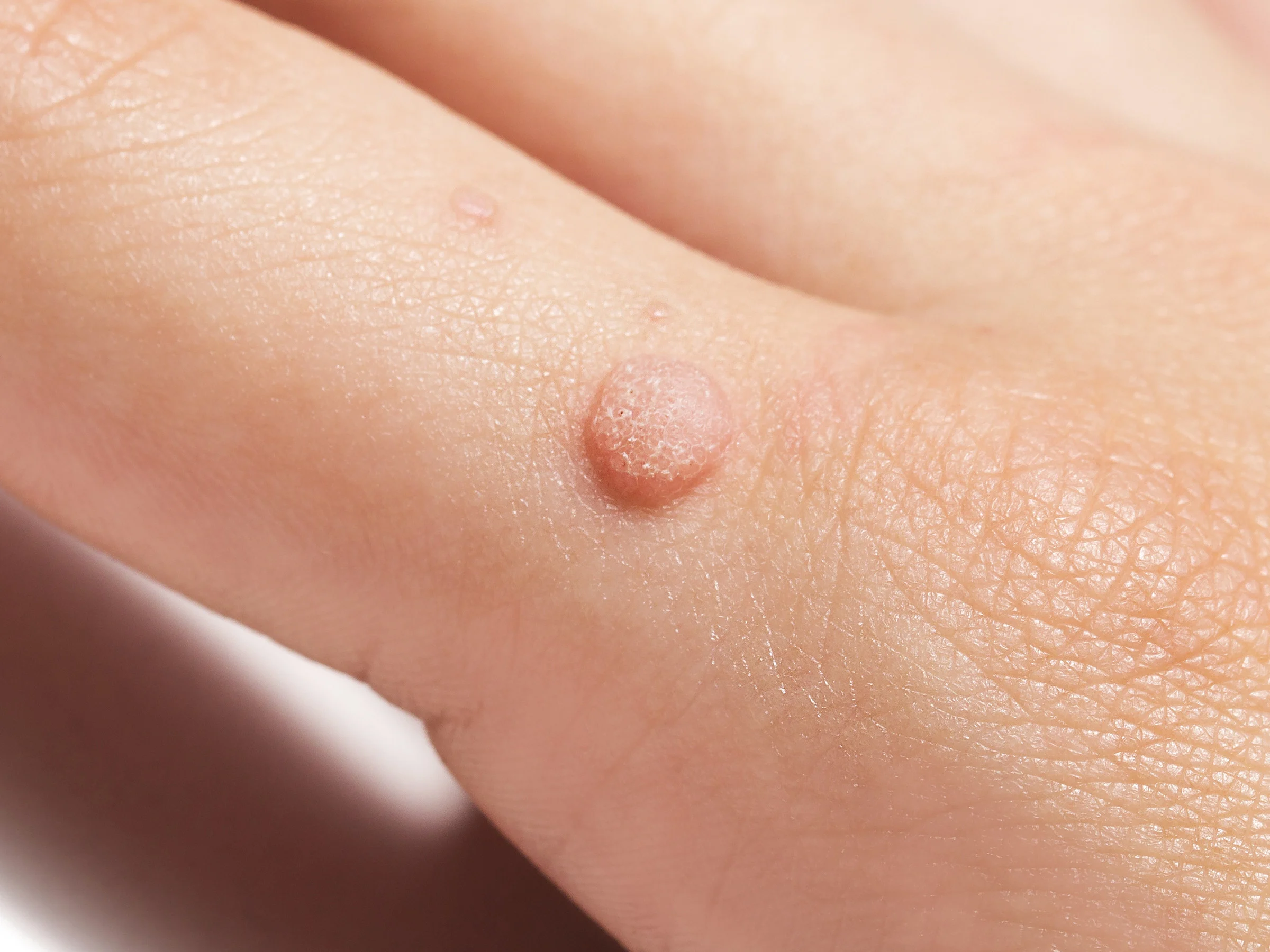
Warts are common, non-cancerous skin growths caused by the human papillomavirus (HPV). They’re contagious and often appear on the hands and feet. Paz Dermatology treats common, plantar and flat warts at its Fresno and Visalia, California offices, usually in a few visits.
A common growth caused by a virus
A wart is a common, non-cancerous skin growth caused by the human papillomavirus, or HPV.[1] Warts often appear on the hands or feet, though they can develop anywhere on the skin.[1]
Most warts are harmless and will go away on their own if you have a healthy immune system, but that can take months or even years.[1]
Common kinds of warts
- Common warts: rough, raised bumps, often on fingers and hands
- Plantar warts: on the bottom of the foot, sometimes painful to walk on
- Flat warts: small, smooth and often in clusters on the face or legs
- A few visitsHow many office treatments it usually takes to clear a wart.[1]
How warts spread
- A virus Warts are caused by HPV.[1]
- Contact Warts are contagious. You can spread the virus to other people and to other parts of your body.[1]
- Small breaks in the skin The virus gets in more easily through cuts, scrapes or skin that’s been picked or shaved.
- Your immune system A healthy immune system often clears warts on its own over time.[1]
- Months to yearsHow long a wart can take to go away on its own.[1]
When a wart is worth treating
| It’s reasonable to wait if | It’s worth treating if |
|---|---|
| The wart is small and doesn’t bother you | It hurts, bleeds or catches on things |
| It isn’t spreading | It’s spreading or new ones keep appearing |
| It’s not on a visible spot | It’s on your face, hands or feet and bothers you |
| You have a healthy immune system[1] | You want it gone quickly[1] |
If you want a wart gone quickly, office treatment usually clears it in a few sessions.[1]
The Paz difference
Make sure it’s a wart, then clear it
Some growths that look like warts are something else, including skin cancers in rare cases. Here, your provider confirms what it is first, then treats it in the office, and a skin cancer screening can be done in the same practice if anything looks unusual.
- Non-cancerousWarts are harmless skin growths, even when they’re stubborn.[1]
When to see us
Book an appointment if:
- A wart hurts, bleeds, itches or changes
- Warts are spreading or keep coming back
- A wart is on your face or genitals
- At-home treatments haven’t worked
- You have diabetes or a weakened immune system and have a wart on your foot
If you’re not sure it’s a wart, have it checked.
Helping prevent warts
- Don’t pick at warts, which can spread them to other skin
- Wear flip-flops in locker rooms and pool areas
- Keep your feet clean and dry
- Don’t share towels, razors or nail tools
- Cover warts to avoid spreading them to others
How we treat warts here
Warts are treated in a regular medical visit. Your provider confirms the diagnosis and treats the wart in the office, often with cryotherapy, which freezes the wart so it scabs up and falls off.[2] Most warts need a few sessions, spaced 2 to 4 weeks apart.[2] See Medical Dermatology for what a medical visit covers.
What treatment costs
Wart treatment is medical care, and it’s handled differently from the cosmetic treatments on this site. Our office walks you through what applies to you when you book.
Wart questions, answered
Often, if your immune system is healthy, but it can take months to years.[1]
Yes. You can spread the virus to others and to other parts of your body.[1]
A crust or blister on the treated skin is expected, and the area usually heals in 4 to 7 days.[2]
The virus can linger in nearby skin, so a wart may return or new ones may appear. Follow-up visits help.
Yes. Warts are common in children, and treatment is chosen to suit their age.
No. That can spread the virus and cause infection. Let your provider treat it.