

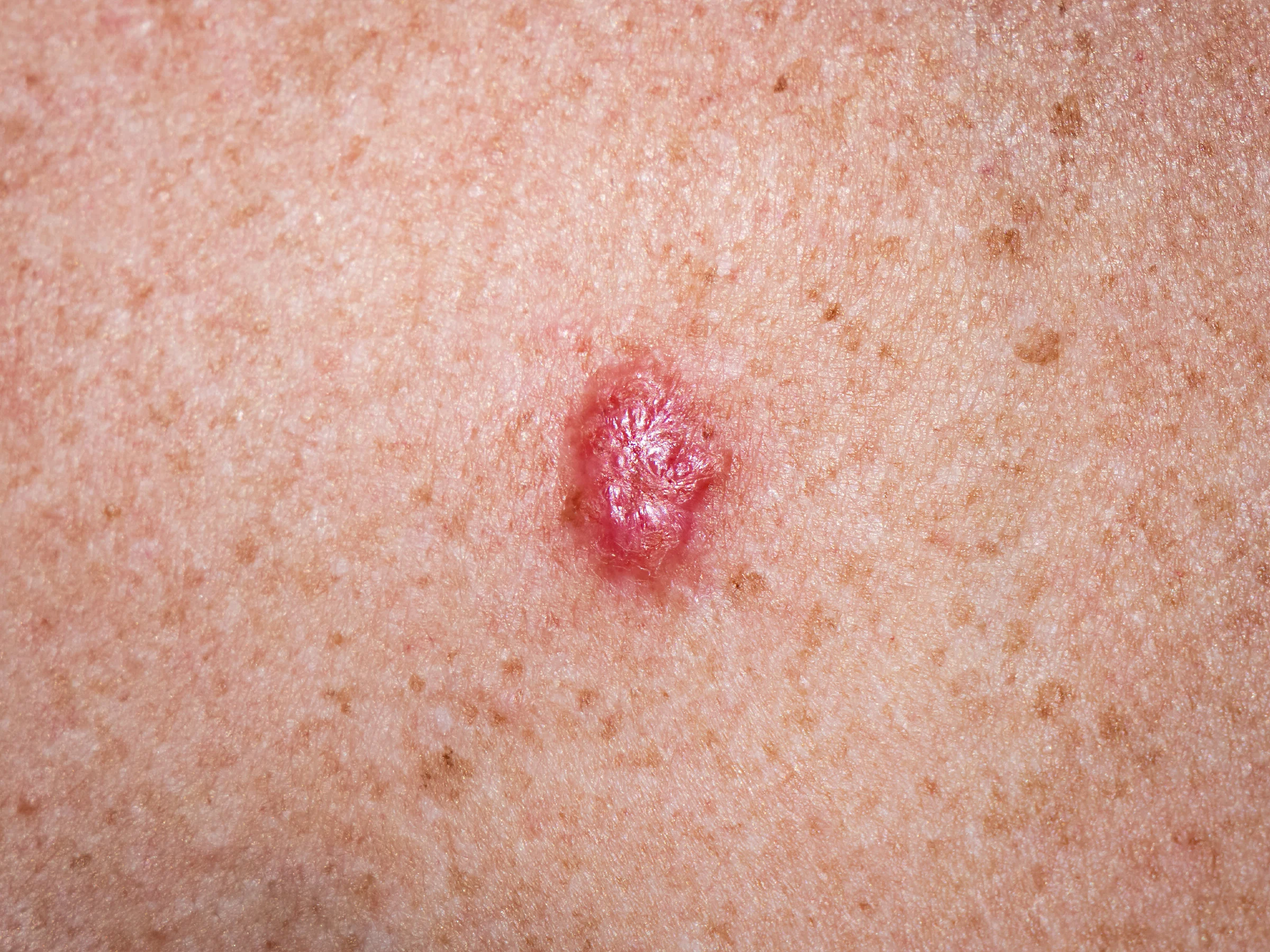
Basal cell carcinoma is the most common type of skin cancer. It grows slowly, rarely spreads, and usually appears on the head and neck. Paz Dermatology diagnoses and treats basal cell carcinoma at its Fresno and Visalia, California offices, including with excision and Mohs surgery.
The most common skin cancer, and a very treatable one
Basal cell carcinoma, or BCC, is the skin cancer people are most likely to get.[1] It tends to grow slowly and rarely spreads to other parts of the body.[1] That’s the reassuring part.
The part to take seriously is that it keeps growing. Left alone, a BCC can reach into the muscle and bone beneath it, and the deeper it goes, the harder it is to remove completely.[2] Caught early, most are removed in a single visit, and many are cured that way.[2]
Why it’s worth a visit
- Most commonBasal cell carcinoma is the most common type of skin cancer.[1] It’s also one of the most treatable.
Why it happens
- Years of sun Most BCCs develop in people who spent years outdoors without protecting their skin, or who used tanning beds.[1] That’s why they show up on the face, ears and scalp.
- Your skin Fair skin that burns easily is the most prone, though BCC can develop in any skin color. In darker skin, it often looks like a brown or black raised growth rather than a pink one.[1]
- A history of skin cancer Having had one BCC makes another more likely, which is why regular skin checks matter after treatment.
- Head and neckWhere most basal cell carcinomas develop, including the ears, nose, eyelids and scalp.[1]
Five ways a BCC can look
BCCs don’t all look alike, which is why they’re easy to dismiss. Any of these is worth showing us.
| It may look like | What to notice |
|---|---|
| A firm, round, raised growth | Often pink and shiny in lighter skin, brown or black in darker skin.[1] |
| A round spot that dips in the center | A raised edge around a small hollow.[1] |
| A scaly spot or patch | Easy to mistake for dry skin.[1] |
| A sore that doesn’t heal | Or one that heals and keeps coming back.[1] |
| A new mark that looks like a scar | With no injury to explain it.[1] |
The common thread is that it’s new, it doesn’t go away, and it doesn’t look like the rest of your skin.
Where to look
| Area | Why it matters |
|---|---|
| Nose | One of the most common spots, and one where saving healthy skin matters.[1] |
| Ears | Easy to miss, and exposed to sun every day.[1] |
| Eyelids | Delicate skin where careful removal counts.[1] |
| Scalp | Hidden by hair, especially where hair has thinned.[1] |
| Rest of the face and neck | Where most BCCs develop.[1] |
The Paz difference
Every standard treatment, in one practice
Most BCCs are removed with an excision, the most common treatment, and many early ones are cured this way.[2] When a BCC sits on the nose, an eyelid, an ear or the scalp, or has come back after treatment, Mohs surgery is often the better choice, and it has the highest cure rate of any skin cancer treatment.[2][3]
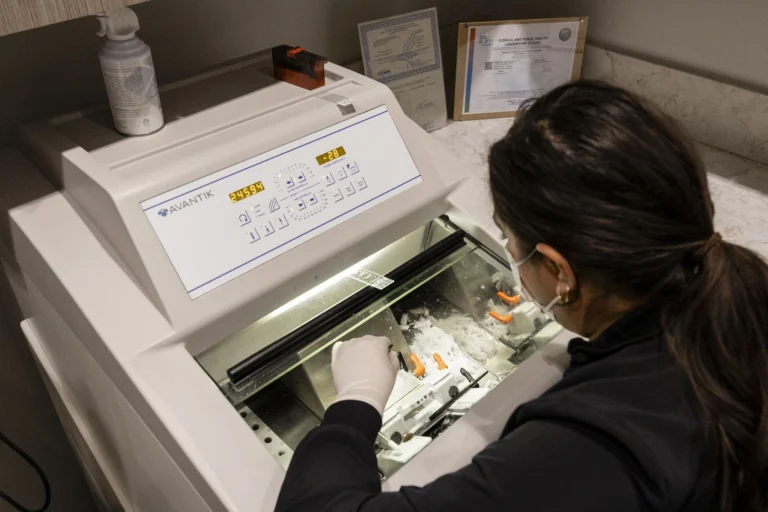
Both are done here, and Mohs is done with our own lab, so each layer is checked the same day while you wait. You don’t have to be sent elsewhere for the right treatment.
- HighestMohs surgery has the highest cure rate of all treatments for skin cancer.[2]
When to have a spot checked
Worth a regular skin check if you:
- Have had a BCC or other skin cancer before
- Have spent years in the sun or used tanning beds[1]
- Have fair skin that burns easily
BCC is slow, so there’s time. That’s not a reason to wait. Smaller means simpler.
After a basal cell carcinoma
Once a BCC is removed, the focus is on catching any new one early. People who’ve had one are more likely to get another, so regular total body exams are the habit that matters most.
Going forward
- Keep your follow-up skin checks, even when everything looks fine
- Check your own skin monthly, especially your face, ears and scalp
- Use a broad-spectrum sunscreen, SPF 30 or higher, and a wide-brimmed hat[4]
- Tell us about any sore or bump that shows up near the old scar
Much of the same sun damage can also lead to squamous cell carcinoma, so a skin check looks for both.
Services we offer
Finding, removing and following up on BCC all happen in this practice. Pick one to see how it works.
What treatment costs
Skin cancer care is medical care, and it’s handled differently from the cosmetic treatments on this site. Our office walks you through what applies to you before your visit.
Basal cell carcinoma questions, answered
Yes, any removal leaves one. Treating a BCC early keeps it smaller, and on the face, Mohs saves as much healthy skin as possible.[3]
It can, and people who’ve had one are more likely to get another. That’s why follow-up skin checks matter.
Yes. In darker skin, a BCC often looks like a firm, raised growth that’s brown or black.[1]