



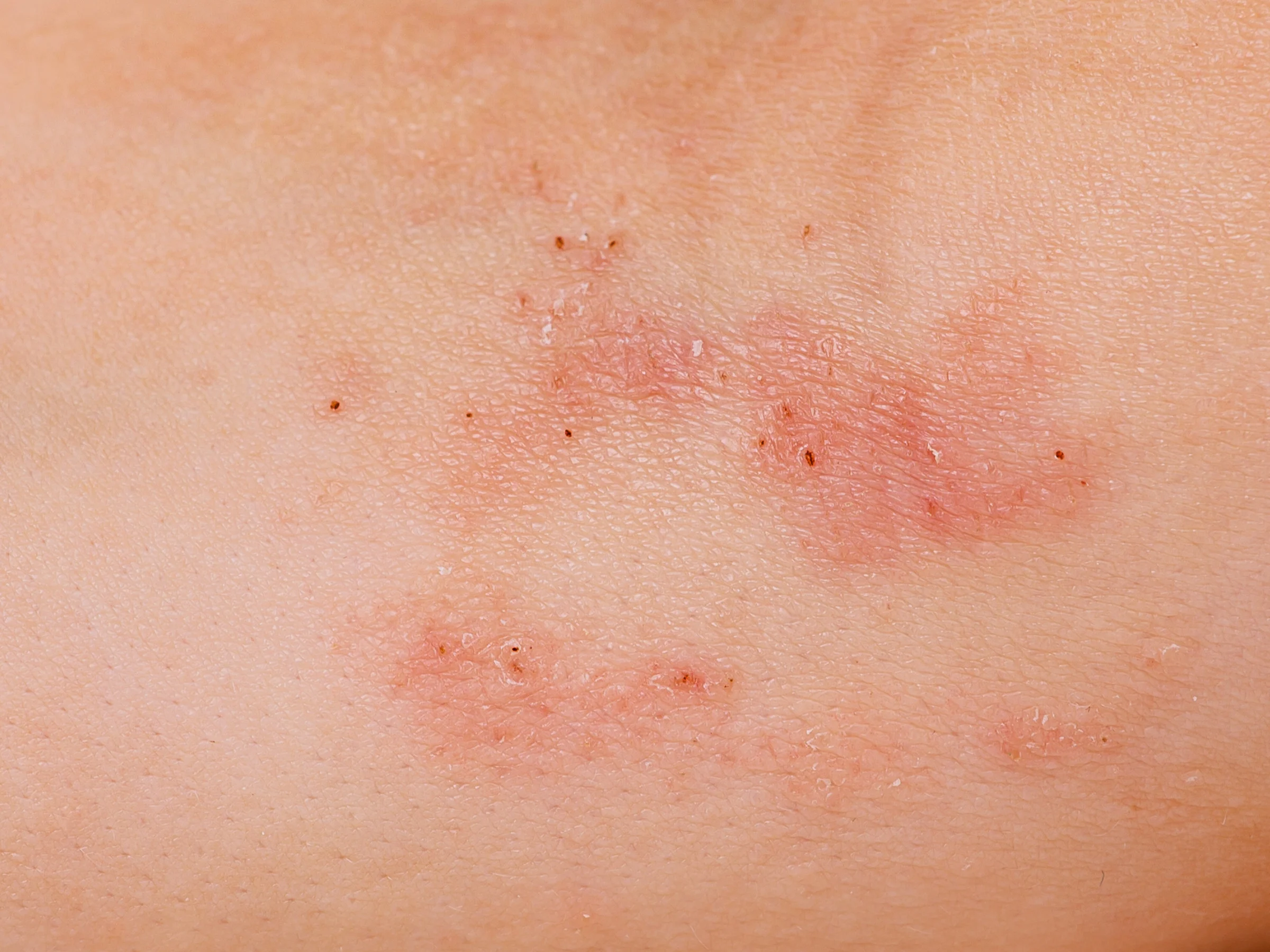
A rash is a change in the skin’s color or texture, and dermatitis means the skin is inflamed. Common causes include contact dermatitis, seborrheic dermatitis, eczema, psoriasis and infections. Paz Dermatology diagnoses and treats rashes at its Fresno and Visalia, California offices.
When your skin reacts
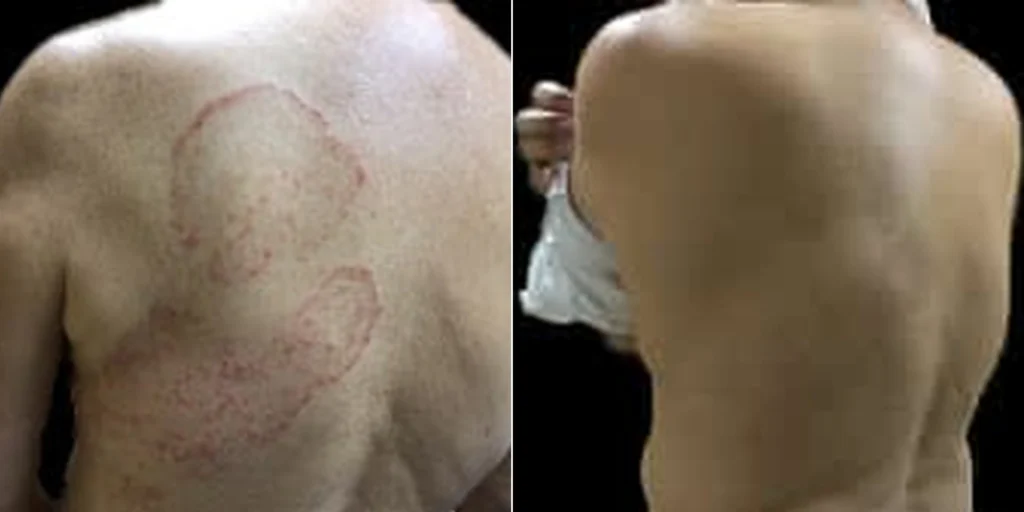
“Dermatitis” simply means inflamed skin. A rash can be red, pink, purple or darker than your skin tone; it can be flat, bumpy, scaly or blistered; and it can itch, sting or burn.
Because so many rashes look similar, the right treatment depends on getting the cause right, which is what a skin exam is for.
Common kinds of rashes
- Contact dermatitis: a reaction to something that touched your skin[1]
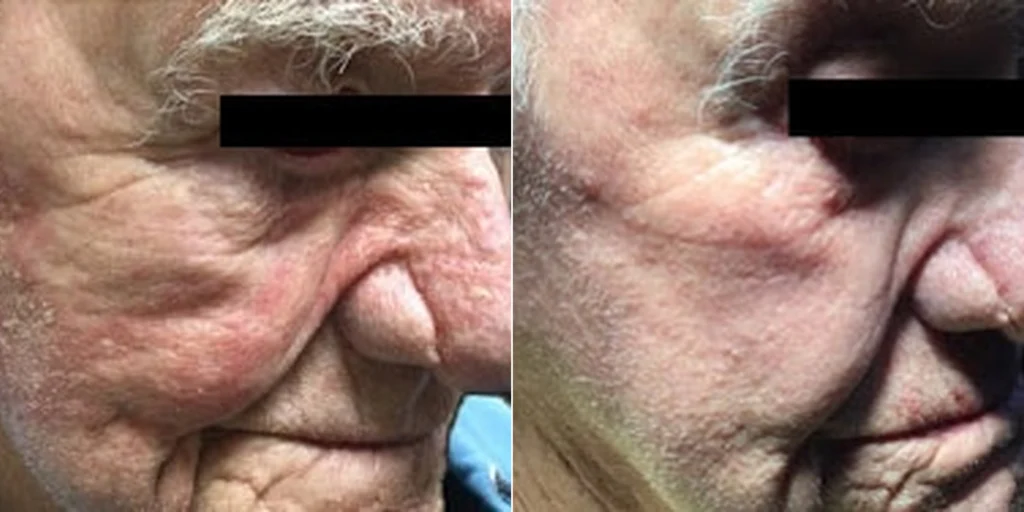
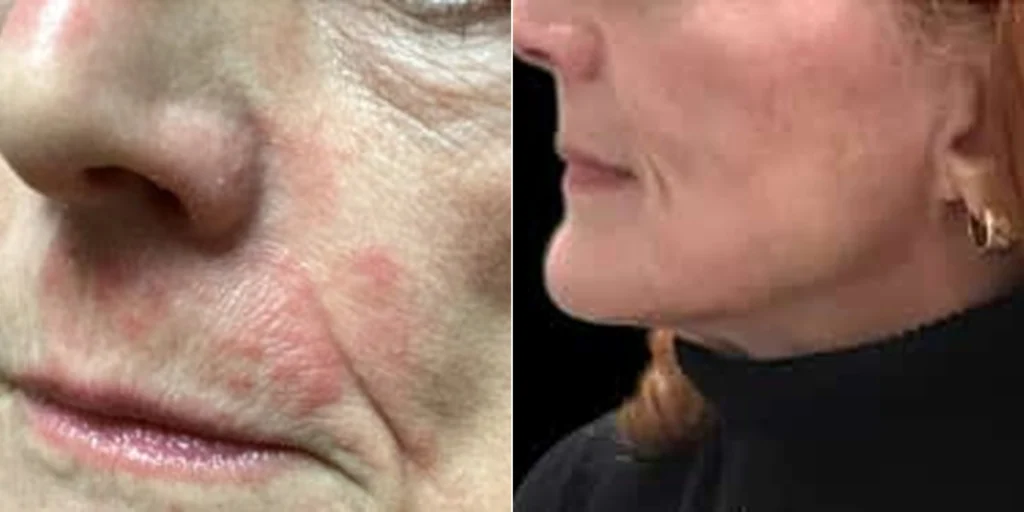
- Seborrheic dermatitis: a scaly rash on oily areas like the scalp and face[2]
- Eczema: itchy, dry, inflamed skin that comes and goes
- Psoriasis: thick, scaly patches
- Skin infection: bacterial, viral or fungal rashes
- 15,000+Things that touch our skin that can cause an allergic reaction.[1]
What sets off a rash
- Something that touched your skin Contact dermatitis happens when something irritates your skin or causes an allergic reaction.[1] Fragrance and nickel are among the most common culprits.[1]
- Oily areas and yeast Seborrheic dermatitis causes a scaly rash on oily areas like the scalp, face, ears, eyebrows and beard.[2]
- An underlying condition Eczema, psoriasis and infections are common causes of rashes that keep returning.
- Heat, sun or medicines Heat, sunlight and some medicines can also bring on a rash.
- Hours or daysHow long after contact an allergic rash tends to appear, even from a brief touch.[1]
Two of the most common rashes
| Contact dermatitis | Seborrheic dermatitis | |
|---|---|---|
| Cause | Something touching your skin irritates it or causes an allergic reaction[1] | A reaction on oily areas of skin[2] |
| Looks like | Itchy skin, then a rash, sometimes with blisters[1] | Scaly patches; red on lighter skin, pink, purple or lighter on darker skin[2] |
| Where | Wherever the trigger touched | Scalp, face, ears, eyebrows, beard, chest[2] |
| Contagious | No[1] | No[2] |
| Key to control | Finding and avoiding the cause[1] | Treatment eases itch and can clear the rash[2] |
Where rashes show up
| Area | Common causes |
|---|---|
| Hands | Contact dermatitis from soaps, gloves or chemicals |
| Face and scalp | Seborrheic dermatitis, contact dermatitis from products |
| Wrists, neck and earlobes | Nickel in jewelry and watches[1] |
| Body folds | Irritation, sweat and infections |
The Paz difference
The right diagnosis, then the right treatment
Treating a rash without knowing its cause often means it comes back. Here, your provider looks at the pattern, where it is and what you’ve been in contact with, and builds a plan to calm it now and prevent the next one.
When to see us
Book an appointment if:
- A rash lasts more than a couple of weeks
- It keeps coming back
- Itching disturbs your sleep
- Over-the-counter creams haven’t helped
Get care right away if:
- The rash spreads quickly, blisters widely or is very painful
- You have a fever, or the rash looks infected
- You have swelling of the face, lips or throat, or trouble breathing (call 911)
Everyday habits that help
- Choose fragrance-free soaps, detergents and skin care
- Wear gloves for cleaning and wet work
- Moisturize to keep your skin barrier strong
- Note new products or exposures before a flare
- Try not to scratch
How we treat rashes here
Rashes are diagnosed and treated in a regular medical visit. Your provider identifies the cause and builds a plan to calm the rash and prevent it from coming back. See Medical Dermatology for what a medical visit covers.
What treatment costs
Rash care is medical care, and it’s handled differently from the cosmetic treatments on this site. Our office walks you through what applies to you when you book.
Rash questions, answered
Allergies can develop over time, and an allergic rash can appear hours or days after contact.[1]
Only by avoiding what causes it.[1] Your provider helps you narrow down the cause and calms the rash in the meantime.
Dandruff may be the mildest form of seborrheic dermatitis.[2]
Some rashes clear for good once the cause is removed; others, like seborrheic dermatitis, can return and are managed over time.[2]
If it comes with swelling of the face or throat, trouble breathing, a high fever or rapid spreading, get care right away.