

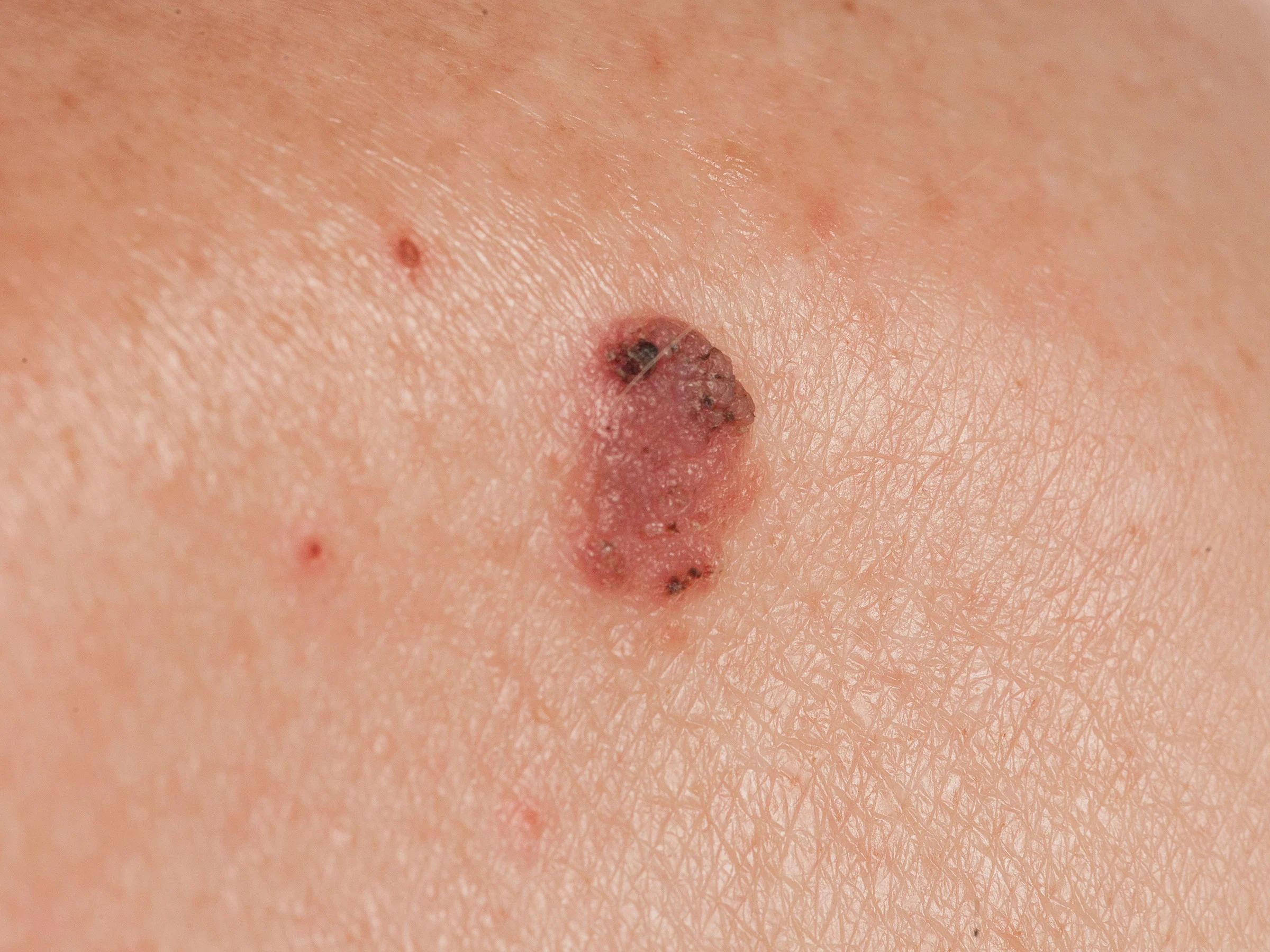
Squamous cell carcinoma is a common skin cancer that develops mostly on sun-exposed skin and can grow deep and spread if left untreated. Paz Dermatology diagnoses and treats squamous cell carcinoma at its Fresno and Visalia, California offices, including with excision and Mohs surgery.
A common skin cancer that’s best caught early
Squamous cell carcinoma, or SCC, is a common type of skin cancer.[1] It most often develops on skin that’s had a lot of sun: the face, scalp, neck, arms, hands and lower legs.[1]
When SCC is still confined to the skin, most people are treated successfully.[2] The reason not to wait is that, left untreated, an SCC can grow deep and spread.[1]
Why it’s worth a visit
- Treated successfullyMost people with squamous cell carcinoma that’s confined to the skin.[2]
What raises the odds
- Sun and tanning beds Most SCC comes from ultraviolet light, from the sun and from indoor tanning.[1]
- Precancers and past skin cancer Actinic keratoses, the rough, scaly precancers left by sun damage, can turn into SCC. A previous skin cancer raises the odds too.[1]
- Your skin and your health Light skin, light-colored eyes and naturally red or blond hair make SCC more likely.[1] So does living with an organ transplant.[1]
- Sun-exposed skinWhere SCC most often develops: face, scalp, neck, arms, hands and lower legs.[1]
Six ways an SCC can look
SCC can be mistaken for a scab, a wart or a patch of dry skin. Any of these, especially one that won’t go away, is worth showing us.
| It may look like | What to notice |
|---|---|
| A rough, scaly patch | Often on skin that’s had years of sun.[1] |
| A firm, dome-shaped growth | Raised and firm to the touch.[1] |
| A sore surrounded by raised skin | A crater with a firm edge.[1] |
| A sore that doesn’t heal | And may bleed.[1] |
| A wart-like growth | Rough and raised.[1] |
| A horn-like growth | A hard spike of skin.[1] |
In darker skin, SCC is the most common skin cancer, and it can develop both on sunny skin and on skin that rarely sees the sun.[1] A sore that won’t heal anywhere on the body deserves a look.
Where to look
| Area | Why it matters |
|---|---|
| Face, ears and lips | The most sun-exposed skin on the body.[1] |
| Scalp | Especially where hair has thinned.[1] |
| Neck, arms and hands | Years of sun add up here.[1] |
| Lower legs | A common spot that’s easy to overlook.[1] |
| Around or under a nail | A less common spot, and worth checking.[1] |
| Inside the mouth or on the genitals | Less common places, and worth mentioning at any skin check.[1] |
The Paz difference
The right removal for where it sits
Most SCCs are removed with an excision: the cancer and some skin around it come out, and the tissue goes to the lab.[2] For an SCC on an ear, eyelid, scalp or hand, or near an eye, Mohs surgery is especially helpful.[2]
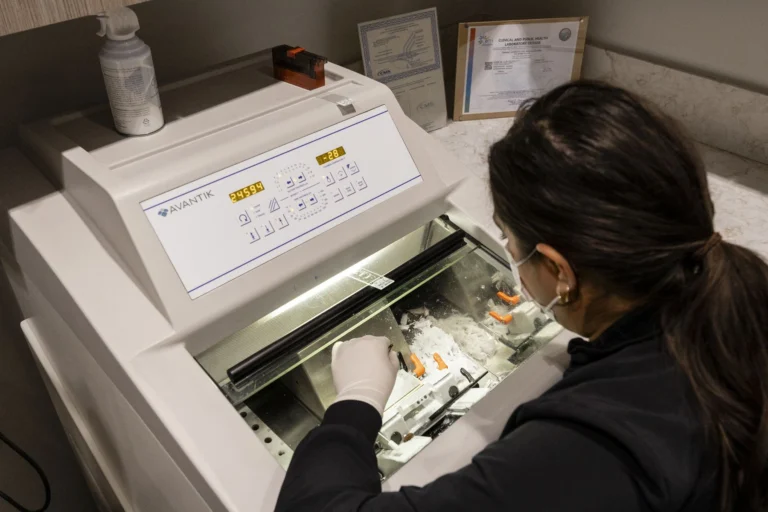
Both are done here, with Mohs layers checked in our own lab the same day. And because precancers and SCC come from the same sun damage, we treat the spots that could become the next one while we’re at it.
- Same dayWith Mohs surgery here, each layer is checked in our own lab while you wait.
When to have a spot checked
A spot that’s been there for weeks and isn’t healing is worth a visit. That’s all the reason you need.
After a squamous cell carcinoma
After treatment, the goal is catching anything new early. When an SCC returns, it tends to show up on or near the scar, so that’s a spot to watch.[2] Regular total body exams do the rest.
Going forward
- Keep every follow-up skin check
- Watch the scar and the skin around it, and tell us about any change[2]
- Use a broad-spectrum sunscreen, SPF 30 or higher, and cover up outdoors[3]
- Have new rough or scaly spots checked, since some precancers can become SCC[1]
The same sun damage that leads to SCC can also lead to basal cell carcinoma, so a skin check looks for both.
Services we offer
Finding, removing and following up on SCC all happen in this practice. Pick one to see how it works.
What treatment costs
Skin cancer care is medical care, and it’s handled differently from the cosmetic treatments on this site. Our office walks you through what applies to you before your visit.
Squamous cell carcinoma questions, answered
Both are common and both come mostly from sun. SCC is more likely to grow deep and spread if it’s left untreated, so prompt treatment matters a little more.[1]
Some can, which is why precancers are treated.[1]
It can, most often on or near the scar.[2] Keep your follow-up visits, and tell us about any change there.
Yes. It’s the most common skin cancer in people with darker skin, and it can develop on skin that gets little or no sun.[1]