
Mohs micrographic surgery is a skin cancer operation that removes a tumor in thin layers and examines each layer under a microscope until no cancer cells remain. Paz Dermatology performs it in Fresno and Visalia, California, under local anesthetic, with a fellowship-trained Mohs surgeon and same-day processing in the practice’s own lab.
The smallest wound that still gets all of it
Most skin cancers are found after a biopsy confirms what a spot really is. From there, the question is how to remove every cancer cell while keeping as much healthy skin as you can. On your face, that difference is measured in millimeters.
Mohs answers it by working in thin layers. Your surgeon removes the visible cancer and a thin rim around it, then examines that tissue under the microscope before deciding whether to take any more.[1] Only skin that still shows cancer comes out. Everything else stays.[1]
Most people who have Mohs are being treated for basal cell carcinoma or squamous cell carcinoma. It’s recommended most when the cancer is large or aggressive, has come back after treatment, or sits where there’s little tissue beneath the skin, like the eyelid, nose, ear, scalp, hand or foot.[1] A slower version is also used for one kind of early melanoma.[1]
What this covers
- Removal of basal cell and squamous cell cancers, one checked layer at a time
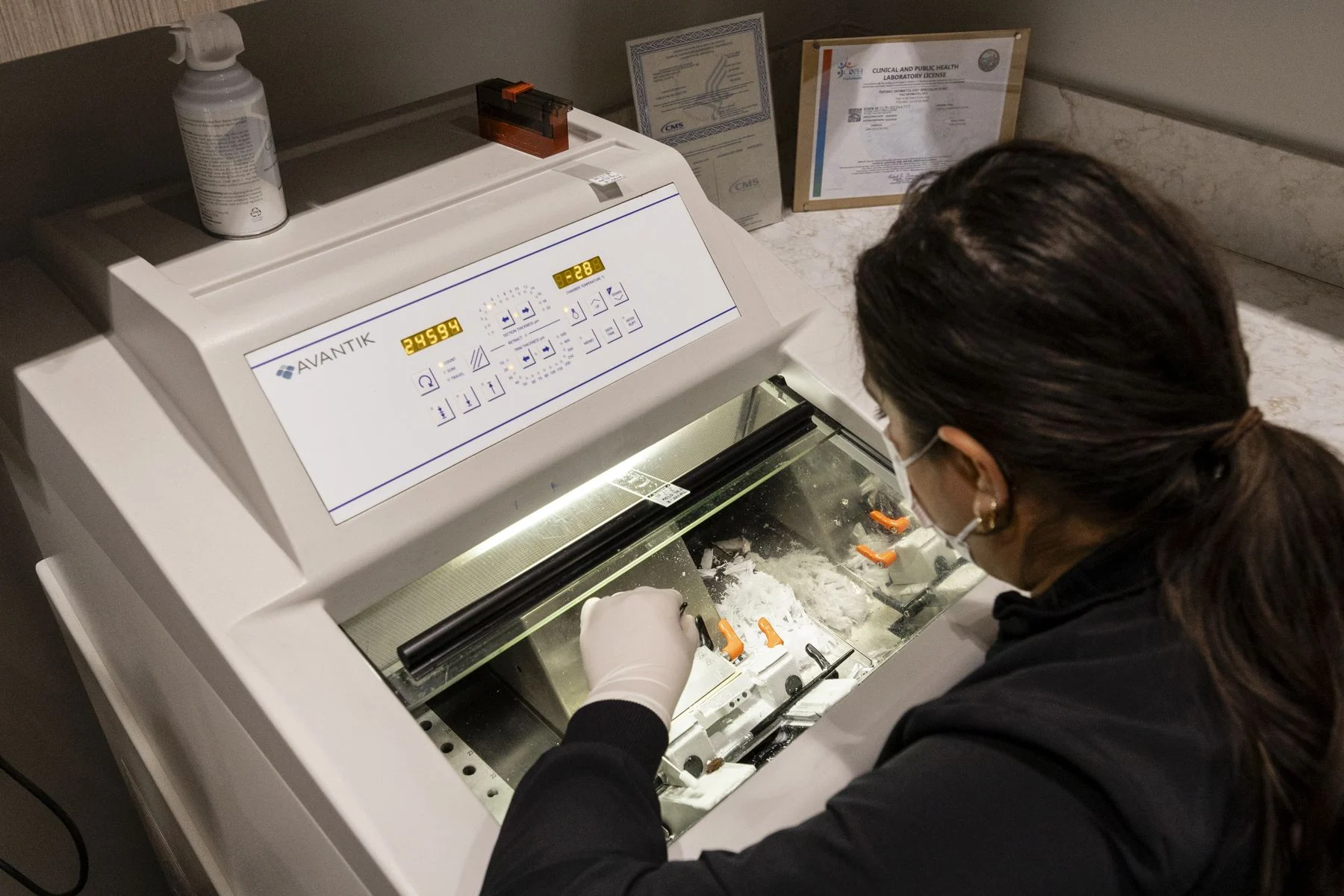
- Same-day processing of every layer in our own lab
- Repair of the wound, usually the same day[2]
- A follow-up visit booked before you leave
- Skin checks afterward, because one skin cancer makes the next check more important
- Up to 99%The success rate reported for Mohs surgery, the highest of any skin cancer treatment.[2]
How a Mohs surgery unfolds
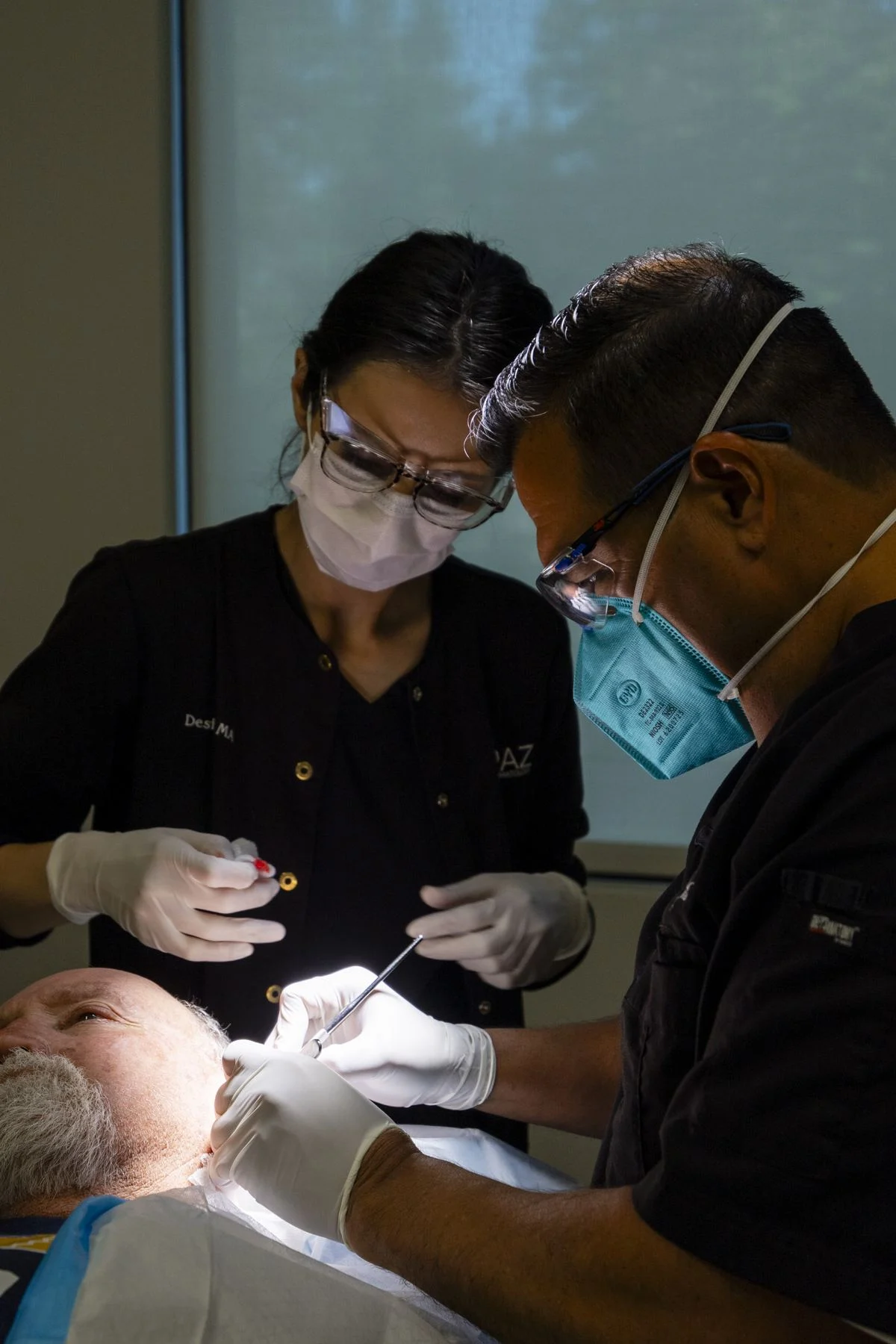
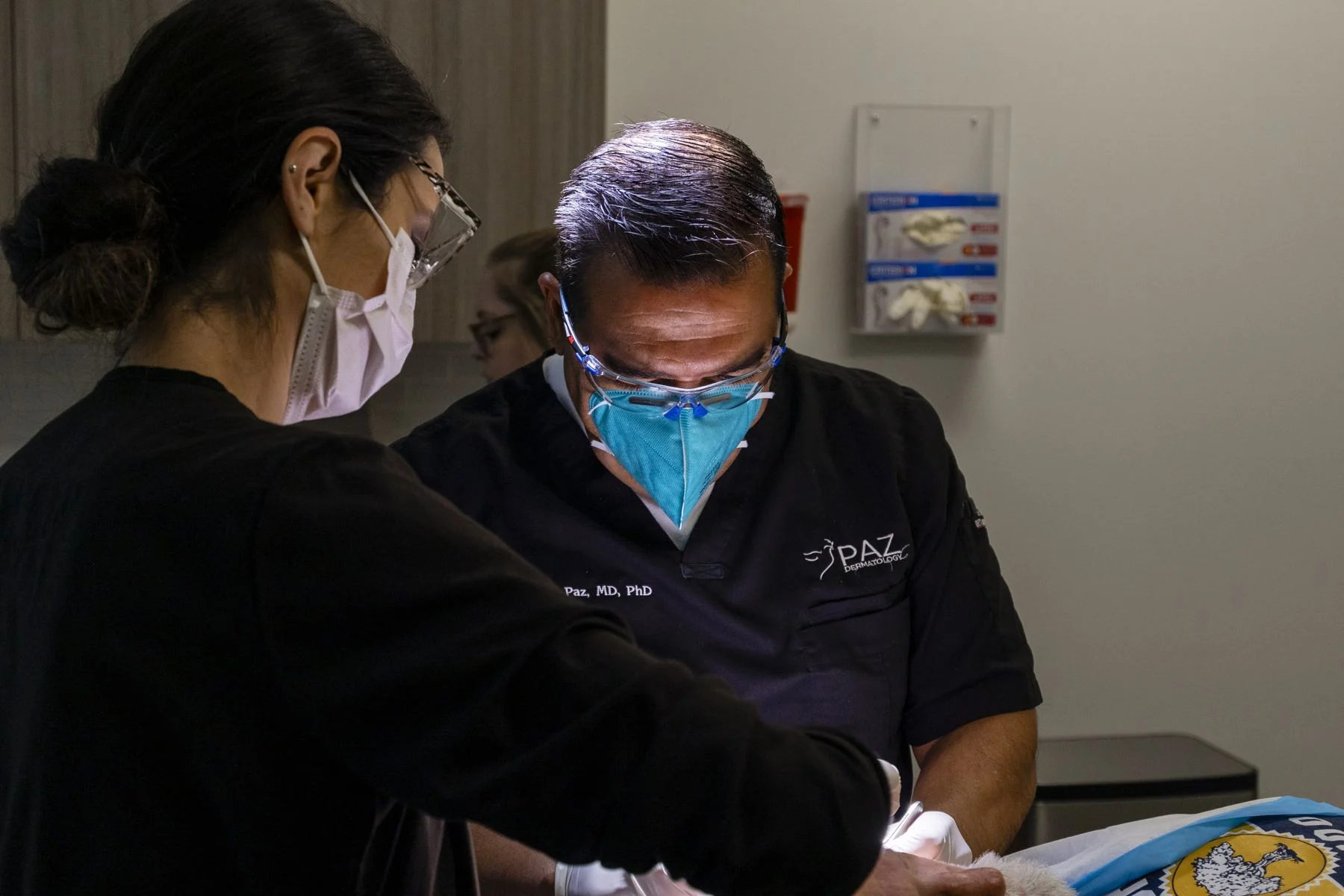
- Numbing and the first layer The area is numbed with local anesthetic, so you’re awake and comfortable. Your surgeon removes the visible cancer along with a thin layer of surrounding skin.[1]
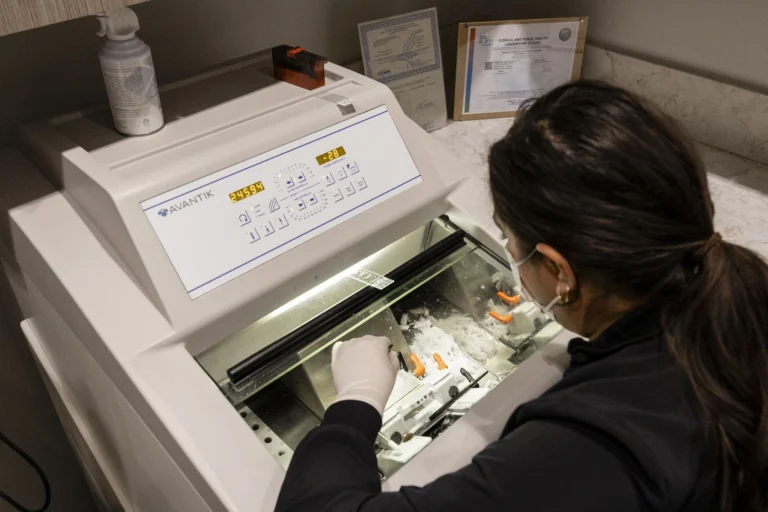
- Into the lab, down the hall That layer goes straight to our in-house lab, where it’s prepared for the microscope the same day. You’re bandaged and wait comfortably in the meantime.[1]
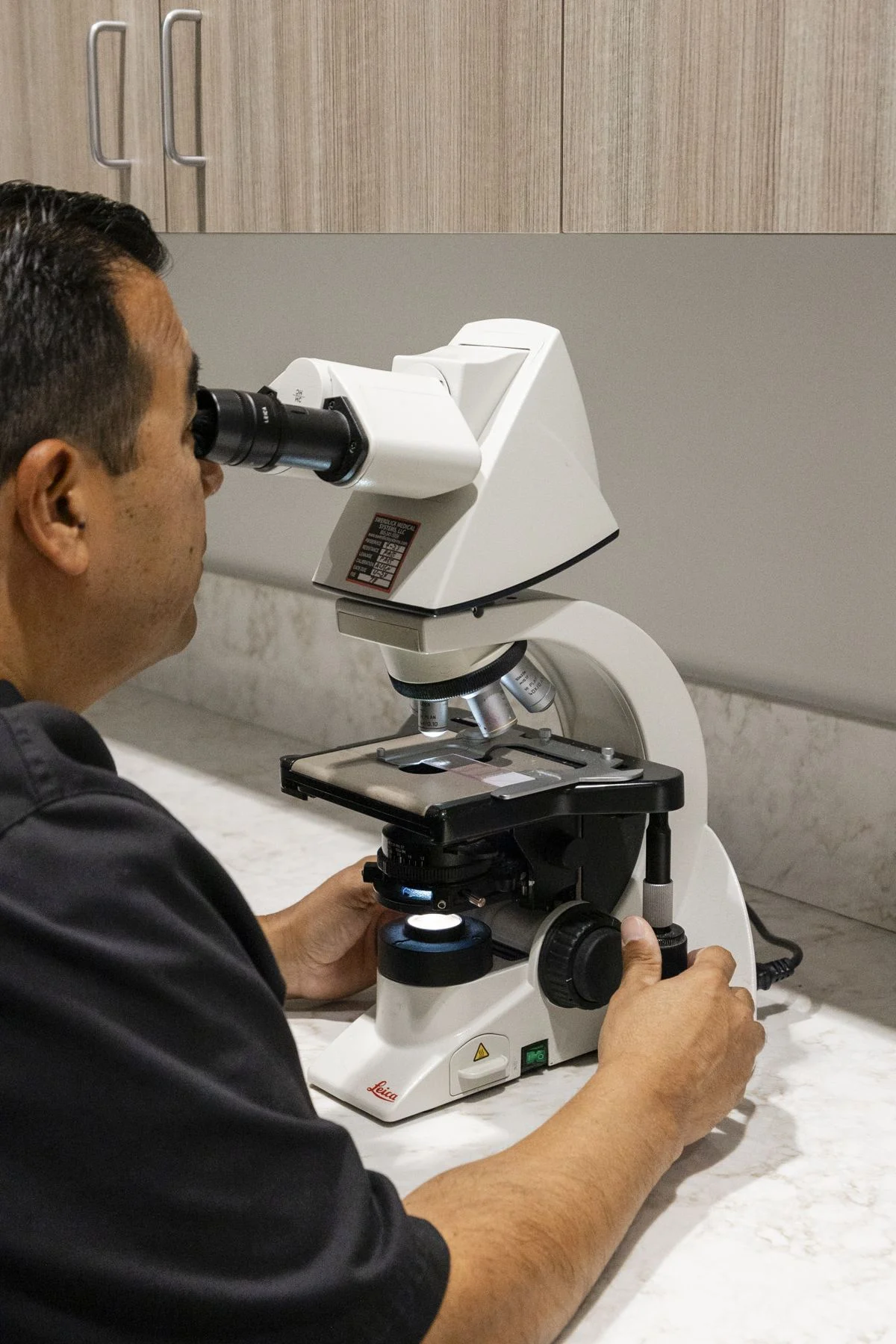
- Reading the edges The layer is examined under the microscope, and any cancer cells left at the edges are mapped to the exact spot.[1]
- Another layer, only where needed If cancer is still there, a thin layer is taken from that spot alone. The cycle repeats until no cancer cells are seen.[1]
- Repair Once the edges are clear, the wound is repaired, in most cases that same day.[2] Some heal nicely on their own, some need stitches, and a few need a graft or flap.[1]
- Layer by layerEach layer is checked under the microscope while you wait, and your surgeon stops as soon as no cancer cells remain.[1]
Know the edges are clear before you go home
With a standard excision, the cancer comes out along with some of the skin around it, and the tissue is sent to a lab. If the lab finds cancer cells at the edges, you may need more treatment.[4] With Mohs, you don’t go home until each layer has been checked, so that answer comes during the same visit.[4]
| Standard excision | Mohs surgery | |
|---|---|---|
| When the edges are checked | After you go home, once the lab reports back[4] | While you wait, before any more skin is taken[1] |
| How much skin is removed | The cancer plus some skin around it[5] | Only skin that still shows cancer[1] |
| If cancer remains at the edge | More treatment, often another excision or Mohs[4] | Another thin layer, the same day[1] |
Standard excision is the most common treatment for basal cell carcinoma, and many early ones are cured with it.[4] Your surgeon will tell you which approach fits yours.
Where Mohs makes the biggest difference
| Area | Why Mohs is often the choice |
|---|---|
| Nose | Little tissue to spare, and every millimeter shows.[1] |
| Eyelids | Thin skin that has to keep working as well as look right.[1] |
| Ears | Thin skin over cartilage, where saving tissue protects the ear’s shape.[1] |
| Scalp | Little tissue between the skin and the skull.[1] |
| Hands and feet | Little tissue beneath the skin, and a scar there has to bend and move.[1] |
| Cancers that came back | A cancer that returned after treatment is one of the main reasons Mohs is recommended.[1] |
The Paz difference
Fellowship-trained, with the lab under the same roof
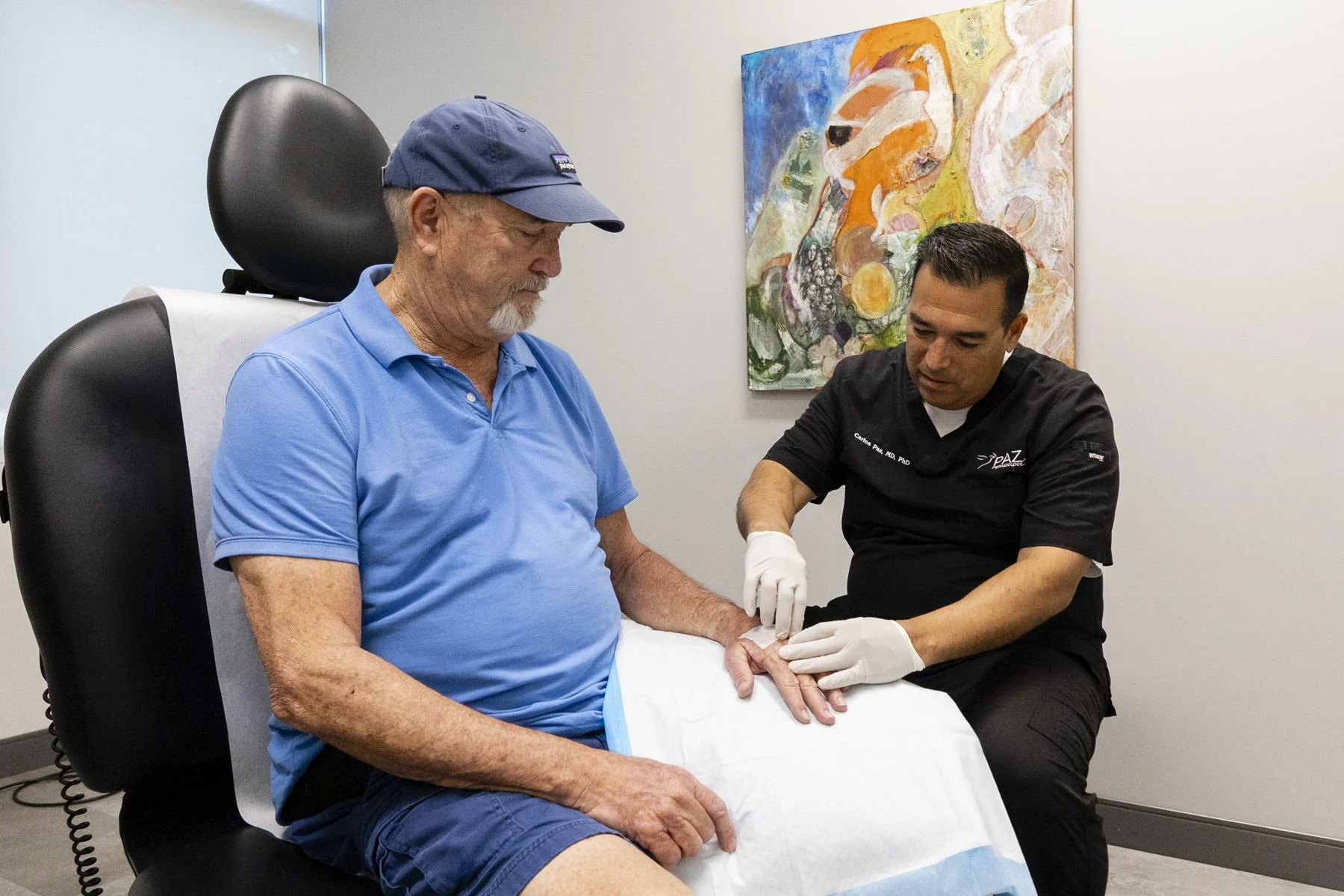
Mohs is its own specialty. A Mohs fellowship adds one to two years of training after dermatology residency, with at least 500 Mohs cases done under supervision.[3] Our surgeon completed that fellowship and is board-certified in dermatology.
The lab is part of the practice, not an outside service. That keeps the day moving: a layer comes out, it’s prepared down the hall, and the answer is back while you wait. And because Mohs is offered at both offices, a Visalia patient doesn’t have to drive to Fresno for it.
When Mohs is the right call
Mohs is often recommended when a skin cancer:
- Is a basal cell or squamous cell carcinoma in an area with little tissue beneath it, like the eyelid, nose, ear, scalp, hand or foot[1]
- Is large or aggressive[1]
- Was treated before and has come back[1]
- Is lentigo maligna, an early melanoma that stays near the surface of the skin[1]
Mohs works on one skin cancer at a time, or a few that sit close together.[1]
Worth telling us before surgery:
- Any blood thinner, including aspirin, at least a week ahead
- Any allergies or sensitivities, including to anesthetics or tape
- Any over-the-counter medicines or supplements you take
- Whether the site is near your eyes or mouth, so you can bring a case for contacts or dentures
None of this needs sorting out before you call. Your consultation covers it, and you’ll leave with written instructions.
The day of surgery, and the days after
Plan to spend a good part of the day with us, since each layer takes time to process. Eat a meal beforehand, bring your usual medicines, and wear a shirt that buttons in front. Refreshments are on hand while you wait.
Bring a friend or family member, and arrange a ride home. A bulky pressure bandage stays on for the first 24 to 48 hours, and on the face it can block part of your view.
For the first few days, do
- Leave the first dressing in place for 24 to 48 hours
- Use an ice pack and keep the area raised on the first day, which cuts down swelling
- Sleep with your head up on extra pillows if the site is on your head or face
- Keep the follow-up visit we book for you before you leave
For the first week, don’t
- Lift anything heavy, bend over, or do anything strenuous
- Rub or bump the site
- Take aspirin unless your doctor has told you to
Discomfort is usually mild. Call us if the site becomes more tender over several days, or if you notice fever or yellow drainage. Everything you need is in the full pre-op and post-op instructions.
Concerns treated
These are the skin cancers Mohs is most often used for here. Pick one to see how we approach it.
What treatment costs
Mohs surgery is medical care, and it’s handled differently from the cosmetic treatments on this site. Our office walks you through what applies to you well before your surgery date, so nothing about it comes as a surprise.
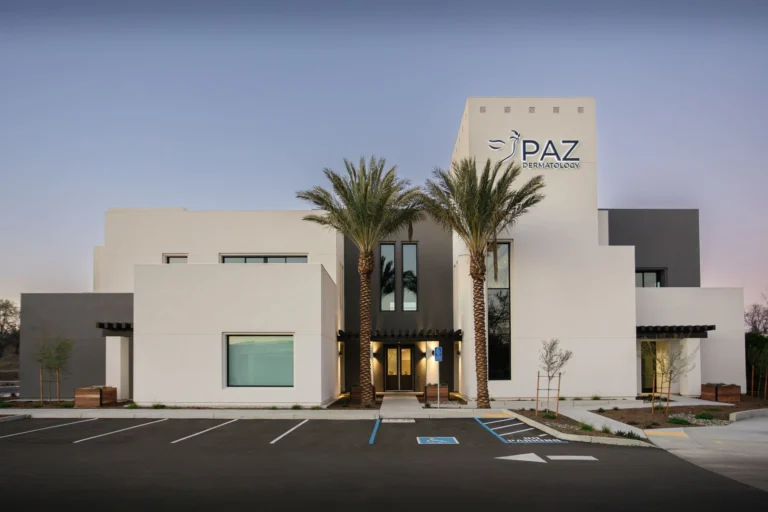
| Where | Our Fresno and Visalia offices |
| Anesthetic | Local. You’re awake and comfortable |
| Lab | In-house, with each layer checked the same day |
| Repair | Usually the same day[2] |
| Plan for | A good part of the day, with a driver |
| Follow-up | Booked before you leave |
Mohs surgery questions, answered
Yes. An injection numbs only the area being treated, so you’re awake and comfortable, and most people go home the same day.[1]
Plan on a good part of the day. Each layer is processed and examined before the next step, and you wait comfortably between rounds. Bring your medicines and something to pass the time.
Please don’t. The pressure bandage can block part of your view if the site is on your face, so bring a driver.
Any surgery on skin leaves a mark. Because Mohs takes only the skin that still shows cancer, the wound is usually smaller than with other methods, and repairs are planned to follow your skin’s natural lines.[1]
Sometimes. It’s used for one kind of early melanoma, lentigo maligna, which stays near the surface of the skin for a while. The version used is called slow Mohs: the tissue needs more time in the lab, so you go home bandaged, and most people come back the next day to learn whether more skin needs to come out.[1] Your surgeon will tell you whether it’s the right approach for yours.
A follow-up visit, booked before you leave, then regular skin checks. Having had one skin cancer is the best reason to keep being checked.
- Same dayIn most cases, the wound is repaired the same day the cancer comes out.[2]