
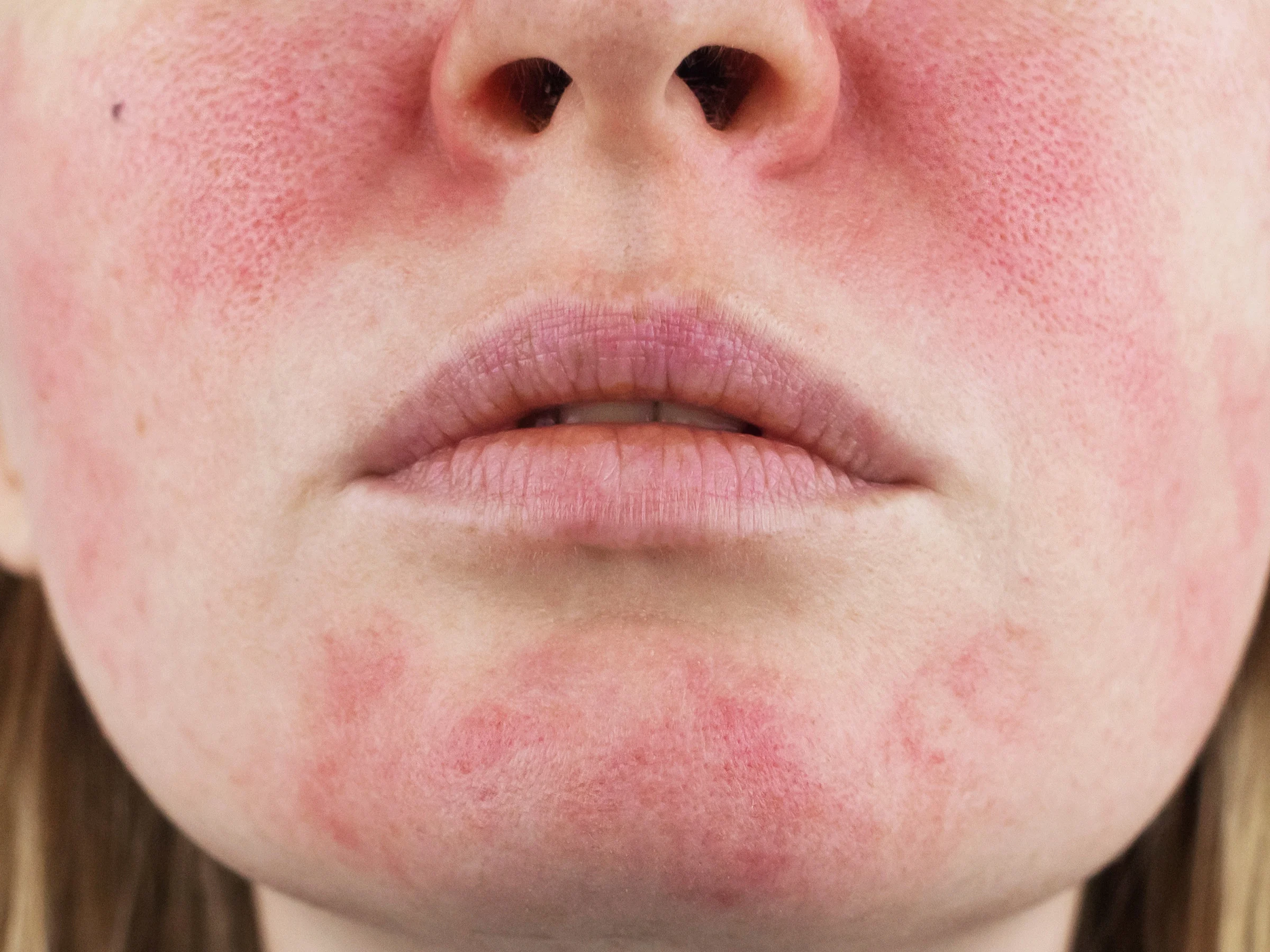
Rosacea is a long-lasting skin condition that mainly affects the face, causing flushing, lasting redness or color change, acne-like bumps and visible blood vessels. Paz Dermatology treats rosacea at its Fresno and Visalia, California offices with prescription care, VBeam laser and IPL.
More than blushing
Rosacea is a skin condition that mainly affects the face.[1] It often starts as easy flushing, then settles into lasting color, and for some people brings bumps, visible blood vessels, irritated eyes or thickened skin.[1]
It develops in people of all skin tones. People with lighter skin often see redness, while people with darker skin may see a brown or violet color.[1]
Signs of rosacea
- All skin tonesRosacea develops in people of every skin tone, though it can look different on darker skin.[1]
What sets off a flare
The cause isn’t fully understood, but most people with rosacea find that certain things set off a flare.
- Sun Just a few minutes of sunlight on rosacea-prone skin can bring on flushing and redness.[2]
- Heat and hot drinks Overheating and the heat of hot beverages can trigger flares.[2]
- Stress Stress is a common trigger, and learning to manage it can help.[2]
- Alcohol and spicy food Red wine and spicy dishes are common culprits for many people.[3]
- SPF 30+A gentle, broad-spectrum sunscreen every day, ideally with zinc oxide or titanium dioxide.[2]
Calming rosacea, two ways
Treatment can reduce flare-ups and help you feel more comfortable.[1] Most plans combine medical care with light or laser treatment for the color that lingers.
| Medical care | Laser and light |
|---|---|
| Prescription creams, gels or medicines for bumps and redness | VBeam, a pulsed dye laser FDA-cleared for rosacea[4] |
| A gentle skin care plan and product advice[2] | IPL, which can reduce flushing and improve texture[5] |
| Help finding your personal triggers | Fewer sessions with laser; gentler, more sessions with IPL[5] |
Prescription care is part of medical dermatology. Laser and light treatments are cosmetic, and your plan can include both.
- Fewer flaresTreatment can reduce flare-ups and help you feel more comfortable.[1]
The Paz difference
Medical care and lasers in one place
Rosacea responds best to a plan that treats both the flare-ups and the color they leave behind. Here, prescription care and laser treatment are in the same practice, so one team manages the whole picture.
Rosacea bumps are easy to mistake for acne, and acne treatments can make rosacea worse, so the right diagnosis matters.
When to see us
Book an appointment if:
- Your face flushes easily and the redness is lasting longer
- You have bumps that don’t respond to acne products
- Small blood vessels are showing on your cheeks or nose
- Your eyes often feel irritated
- Redness is affecting how you feel about your skin
Everyday habits that help
- Use a gentle, fragrance-free sunscreen, SPF 30 or higher, every day[2]
- Keep a note of what seems to trigger your flares
- Cool off quickly: a cold, wet cloth on your neck or a cold drink helps[2]
- Let hot drinks cool before sipping[2]
- If red wine or spicy food sets you off, try a milder choice
- Ask for a skin care plan made for rosacea-prone skin[2]
Services we offer
Along with prescription care, these treatments calm rosacea’s redness. Pick one to see how it works.
What treatment costs
Prescription rosacea care is medical care, and it’s handled differently from the cosmetic treatments on this site. Our office walks you through what applies to you when you book. For VBeam and IPL, your cosmetic consultation is free.
Rosacea questions, answered
Not yet, but treatment can reduce flare-ups and help you feel more comfortable.[1]
Rosacea is a medical skin condition. It often starts with easy flushing and can progress, so it’s worth having it diagnosed.
Yes. It develops in all skin tones and may look brown or violet rather than red.[1]
A gentle, broad-spectrum, fragrance-free sunscreen with zinc oxide, titanium dioxide or both, SPF 30 or higher.[2]