

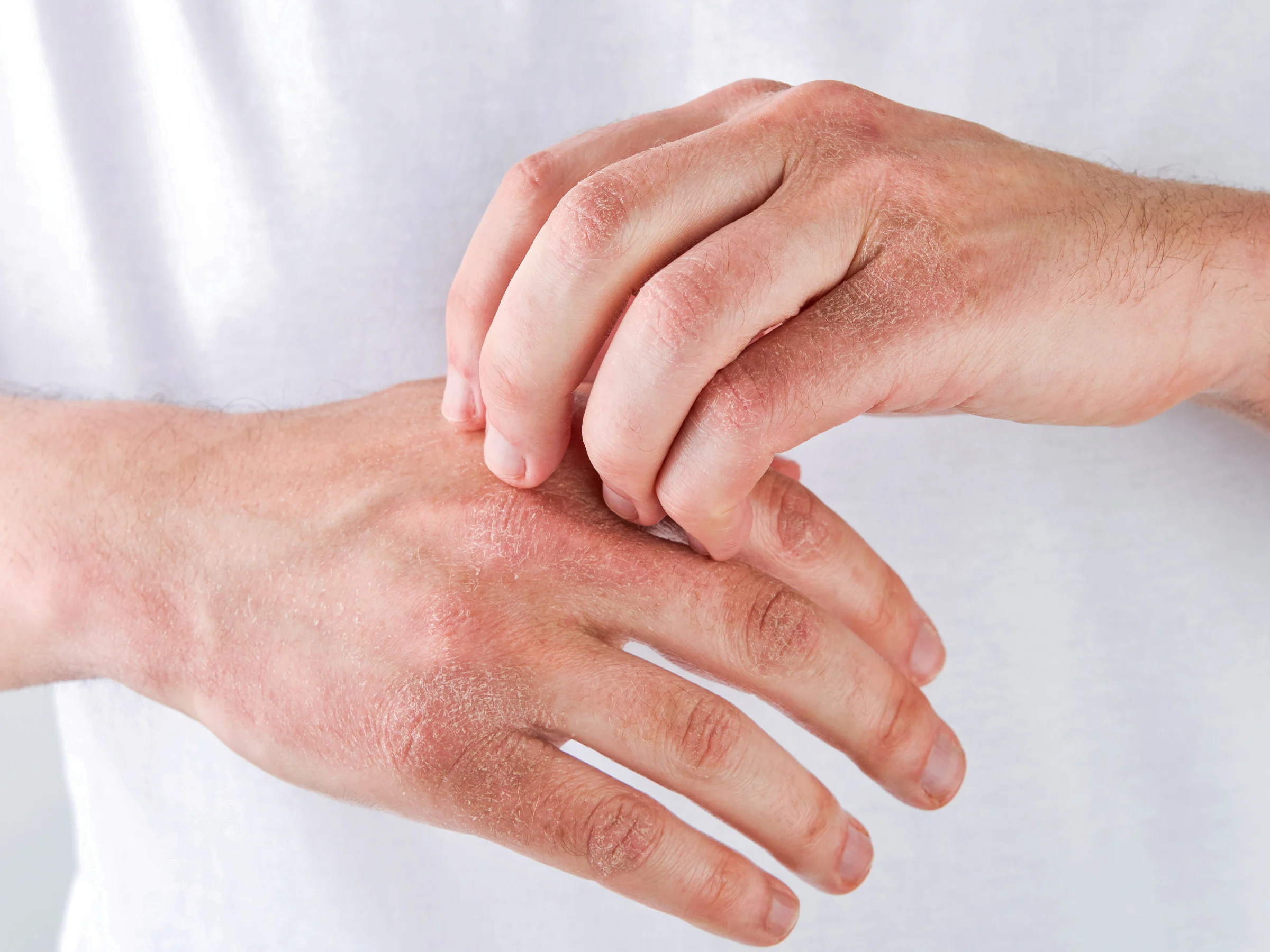
Eczema, or atopic dermatitis, is a common, long-lasting condition that causes itchy, dry, inflamed skin, often starting in childhood. It isn’t contagious. Paz Dermatology diagnoses and treats eczema in babies, children and adults at its Fresno and Visalia, California offices.
The itch that rashes
Eczema, also called atopic dermatitis, is a common condition that causes itchy, dry and inflamed skin.[1] It usually begins in childhood, often between 2 months and 5 years of age, but it can start at any age.[1]
Many children outgrow it by their teens, while some people have it for life.[1] It isn’t contagious, so it can’t spread from person to person.[1]
Signs of eczema
- Not contagiousEczema can’t spread from person to person.[1]
Why skin flares
- A weaker skin barrier In eczema, the skin’s outer layer doesn’t hold in moisture or keep out irritants as well as it should, so it dries and flares easily.
- Family history A child’s risk is higher when a parent has or had eczema, asthma or hay fever.[1]
- Triggers Finding and avoiding your triggers can reduce flare-ups, although not everyone can pin theirs down.[2] Common ones include harsh soaps, fragrances, sweat, stress and dry air.
- MoisturizeDermatologists recommend moisturizer for everyone with eczema. It helps prevent cracks and fissures.[2]
Control, not just relief
A dermatologist’s treatment plan can reduce flare-ups and ease symptoms such as itch and pain.[2] Most plans are built from three parts.
| Part of the plan | What it does |
|---|---|
| A skin care plan | Bathing, moisturizing and being gentle with your skin[2] |
| Medicine you apply to your skin | Calms flares; many people control eczema this way[2] |
| Medicine that works throughout the body | For widespread or severe eczema, FDA-approved options exist[2] |
Your provider builds the plan around your age, your skin and how much of it eczema affects, and adjusts it as your skin changes.
Where eczema shows up
| Who | Where it’s common |
|---|---|
| Babies | Face, scalp and outer arms and legs |
| Children | Creases of the elbows and knees, wrists and ankles |
| Adults | Hands, feet, neck and around the eyes |
| Anyone | Anywhere the skin is dry and irritated |
The Paz difference
Care for the whole family, at every stage
Eczema changes as people grow, and so should the plan. Here, babies, children and adults are all cared for in the same practice, so a family can see one team and a child’s plan can grow with them.
Some rashes that look like eczema are something else, such as contact dermatitis or an infection. Getting the diagnosis right comes first.
- 2 months to 5 yearsWhen eczema most often first appears, though it can start at any age.[1]
When to see us
Book an appointment if:
- Itching keeps you or your child up at night
- Moisturizers and over-the-counter creams aren’t enough
- Patches are spreading, cracking or bleeding
- Eczema is affecting school, work or sleep
Call us promptly if:
- Skin becomes painful, weepy, crusted or has pus, which can mean infection
- Your child has a fever along with a sudden, painful flare
Everyday habits that help
- Moisturize every day,[2] ideally right after bathing, with a mild, fragrance-free cream or ointment
- Take short, lukewarm baths or showers
- Choose fragrance-free soaps, detergents and skin care
- Wear soft, breathable fabrics like cotton
- Keep nails short to limit damage from scratching
- Keep track of what seems to set off flares[2]
How we treat eczema here
Eczema is diagnosed and treated in a regular medical visit, where your provider examines your skin, finds your triggers where possible and builds your plan. See Medical Dermatology for what a medical visit covers.
What treatment costs
Eczema care is medical care, and it’s handled differently from the cosmetic treatments on this site. Our office walks you through what applies to you when you book.
Eczema questions, answered
Not yet, but treatment can ease symptoms and lead to clearer, sometimes completely clear, skin.[1]
Many children do by their teenage years, though some people have eczema for life.[1]
No. It can’t spread from person to person.[1]
Dermatologists recommend moisturizer for everyone with eczema.[2] A mild, fragrance-free cream or ointment used every day is a good start, and your provider can suggest one for your skin.
Not exactly. It’s linked to allergies, asthma and hay fever in families,[1] and some people’s flares have allergy triggers.
That’s a good time to book a visit. Prescription options can control eczema when over-the-counter care isn’t enough.[2]