

A skin cancer excision is a surgical procedure that removes a skin cancer or suspicious growth along with a margin of healthy skin, which is then examined in a laboratory. Paz Dermatology performs excisions at its Fresno and Visalia, California offices under local anesthetic.
Take it out, check the edges, close it neatly
Once a biopsy confirms a skin cancer, the next step is usually removing it. An excision does that in one visit. The cancer comes out with a little healthy skin around it, and the tissue goes to a lab so the edges can be checked.[1] When the edges are clear, treatment is complete.[1]
It’s the most common treatment for basal cell carcinoma, and many early ones are cured this way.[1] It’s used for squamous cell carcinoma and for early melanoma too, and for an early melanoma it may be the only treatment you need.[2][3]
What this covers
- Removal of the skin cancer with a margin of healthy skin
- Numbing, so you’re comfortable throughout
- Closing the wound with care for how it heals
- A lab check of the removed tissue[1]
- A follow-up visit to check healing and go over results
- Most commonExcision is the most common treatment for basal cell carcinoma, and many early ones are cured with it.[1]
How an excision goes
- Planning the removal Your provider outlines the spot and a margin of normal-looking skin around it. The margin is there because cancer cells can reach a little past what the eye can see.
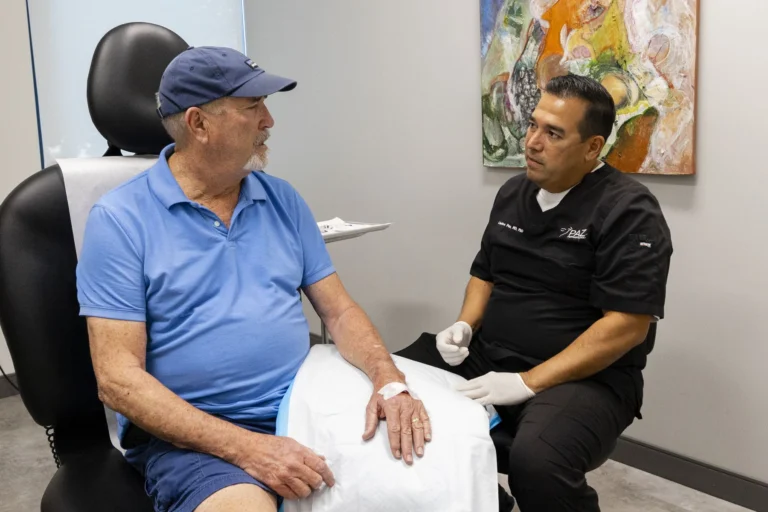
- Numbing A local anesthetic numbs the area, so you’re awake and comfortable.
- Removal The cancer and its margin are removed.[2] For a smaller spot, this part usually takes about half an hour.
- Closing The skin is stitched closed, placed along natural lines where possible so the scar settles well.
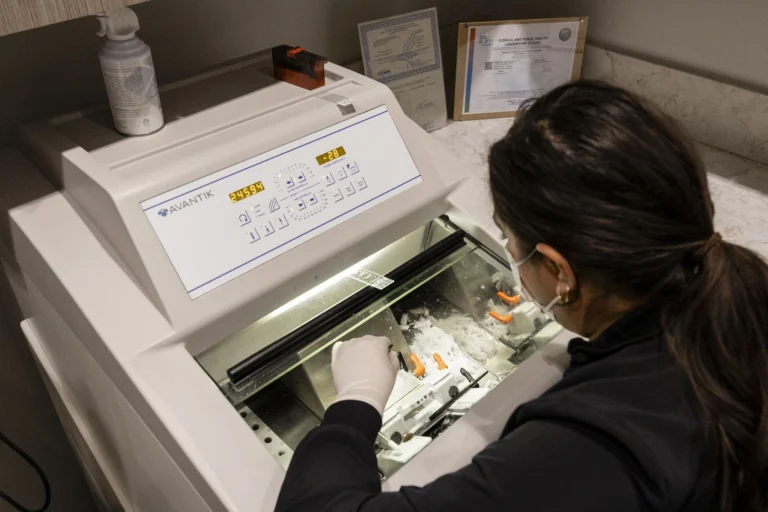
- The lab The tissue goes to a laboratory, where the edges are examined under a microscope.[1] If they’re clear, you’re done. If cancer cells reach an edge, more treatment follows, often Mohs surgery.[1]
- About 30 minutesThe usual time for a smaller excision, done in the office.

When an excision is the right call, and when Mohs is
Both remove skin cancer, and both are done here. The difference is where the cancer sits and how much healthy skin can be spared.
| Standard excision | Mohs surgery | |
|---|---|---|
| Best suited to | Most basal cell carcinomas, and many other skin cancers where there’s room for a margin[1] | Cancers on the nose, eyelids, ears, scalp, hands and feet, or ones that are large, aggressive or have come back[4] |
| How the edges are checked | By the lab, after you go home[1] | During your visit, before any more skin is taken[4] |
| How much skin comes out | The cancer plus a margin of healthy skin[2] | Only skin that still shows cancer[4] |
| Visit length | Usually under an hour for a smaller spot | A good part of the day |
Your provider recommends one or the other based on your cancer’s type, size and location. If you’d like to understand the choice, ask. It’s a good question.
What an excision is used for
| Growth | How excision helps |
|---|---|
| Basal cell carcinoma | The most common treatment, and many early ones are cured with it.[1] |
| Squamous cell carcinoma | Removes the cancer and some skin around it, with the tissue sent to the lab.[2] |
| Early melanoma | Often done during an office visit, and may be the only treatment needed.[3] |
| A suspicious growth | Removes all of it so the lab can give a complete answer, including for a mole that’s changed. |
The Paz difference
Careful removal, with an eye on how it heals
Removing the cancer completely comes first. How the scar looks comes a close second, especially on the face, neck and other places people see. Excisions here are planned with both in mind: the right margin, and a closure that follows your skin’s natural lines.
And because this practice also performs Mohs surgery, if your cancer turns out to need it, the next step is here too, with the same team that treated you the first time.
- 1 to 2 weeksHow long most excision wounds take to heal.
Is an excision right for you?
Tell us before your procedure if you:
- Take a blood thinner or aspirin
- Have any allergies, including to anesthetics or tape
- Have a pacemaker or other implanted device
Healing well
You’ll leave with a pressure dressing and written instructions, and your follow-up visit is scheduled before you go.
What you’ll need at home
- Vaseline or Aquaphor
- Telfa dressings, paper tape or bandages
- An ice pack
Caring for the wound
- Leave the first dressing on, and dry, for 24 to 48 hours, then remove it
- Clean the incision gently with mild soap and water. Skip rubbing alcohol and hydrogen peroxide unless we tell you otherwise
- Pat it dry, apply Vaseline or Aquaphor and cover it with a Telfa dressing or bandage, every day until your follow-up visit
- Ice the area for 15 minutes every other hour for the first 24 hours, or as needed, to ease swelling and bruising
While you heal
- For soreness, Extra Strength Tylenol and ibuprofen work best staggered; we can prescribe something stronger if you need it
- Avoid aspirin and anything that contains it for one week
- No strenuous activity for 4 weeks. For a site on your arms, legs or back, lift nothing heavier than 10 pounds
- For a site on an arm or leg, wrap it daily with a Coban or ACE bandage for 30 days
- No smoking or alcohol for 48 hours
- Don’t rub or massage the site, and wait 6 months before using scar creams or gels
- After surgery on your head, sleep with your head raised on several pillows
- If you were prescribed an antibiotic, take it with food
If it bleeds
A little bleeding is normal. Press firmly on the dressing for 15 minutes, and repeat once if it doesn’t stop. If it’s still bleeding after 30 minutes of pressure, call our office at (559) 233-3376.
Call us if you notice signs of infection
- Tenderness that gets worse over several days
- Fever
- Yellow discharge
Every excision leaves a scar. How it looks depends on the spot’s size and location and how your skin heals, and it keeps fading for months.
Concerns treated
These are some of the growths excision is used for here. Pick one to learn more.
What treatment costs
Skin cancer removal is medical care, and it’s handled differently from the cosmetic treatments on this site. Our office walks you through what applies to you before your procedure date.
Excision questions, answered
Yes. A local anesthetic numbs the area, and most people go straight home afterward.
Yes, every excision does. It’s placed along natural skin lines where possible, and it softens and fades over the following months.
The lab checks the edges of what was removed. If they’re clear, treatment is complete. If not, you’ll hear about the next step, which is often Mohs surgery.[1]
Removing it whole means the lab can confirm the edges are clear. That confirmation is the point.
Usually the same or next day, depending on your job and where the excision is. Heavy lifting and strenuous exercise wait a little longer.
Usually not for a small excision under local anesthetic. If yours is near your eye or you’d feel more comfortable with a ride, bring someone.